
Pure gingivitis is considered reversible if plaque and tartar are removed and the teeth are well cared for afterwards. If the tooth-supporting structures are already affected, however, the damage often cannot be undone.
Gingivitis in dogs: causes, signs, vet
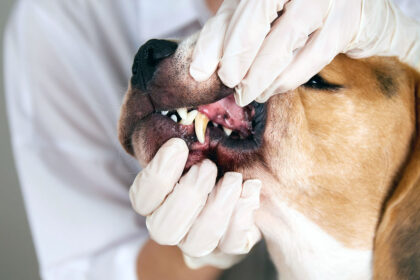 Gingivitis in dogs is an inflammation of the gum margin. It is usually caused by plaque, in which bacteria multiply. It is also very common: according to the guidelines of the US animal hospital association AAHA, most dogs already have some disease of the tooth-supporting structures by the age of three. Detected early, pure gingivitis is considered reversible. That is why it belongs in the hands of a vet, and at home daily dental care helps above all.
What is gingivitis in dogs?
With gingivitis, the gums at the edge of the teeth are red and swollen. It is also the first stage of so-called periodontal disease. If left untreated, it can develop into periodontitis. Then, however, it is no longer just the gums that are affected but also the tissue that holds the tooth in the jaw, and teeth can loosen.
How does gingivitis develop?
- Plaque: A soft layer of bacteria, plaque, constantly forms on the teeth. If it is not removed, it therefore irritates the gums. In addition, over time it hardens into tartar, to which even more plaque sticks.
- Crowded teeth: In small breeds, the teeth are often close together. That is why food residues and plaque get stuck there more easily, and gum problems often appear earlier.
- Little dental care: Without regular tooth brushing, on the other hand, plaque can build up undisturbed.
- Age: Over the years, more tartar accumulates, so older dogs are affected more often.
- General illnesses: Conditions such as diabetes or kidney disease can also be involved. However, your vet will clarify that.
How do I recognise gingivitis in dogs?
| Sign | What you notice |
|---|---|
| Red gums | A red line along the gum margin, especially on the outer side of the teeth. |
| Swelling | The gums also look thicker and less firm. |
| Bad breath | The breath smells foul because bacteria produce bad-smelling substances. |
| Tartar | Yellowish to brown deposits, often first on the back teeth. |
| Sensitivity | Your dog therefore chews more carefully or does not like its mouth being touched. |
When should I take my dog to the vet?
As soon as you notice one of these signs, have the mouth examined by a vet. The vet then checks the teeth and gums and decides which treatment is needed. Tartar, however, cannot be brushed away but is removed professionally at the practice. The US animal hospital association AAHA supports general anaesthesia for this, because only then can teeth and gums be examined and cleaned thoroughly. Veterinary dentists also recommend regular check-ups so that problems are noticed early.
How do you care for your dog’s teeth at home?
- Brush daily: Ideally, brush the teeth every day, but at least several times a week. That way, plaque has no chance to harden into tartar.
- The right tools: Use a dog toothbrush or a finger brush and a toothpaste for dogs. Toothpaste for humans, on the other hand, is not meant for dogs.
- Get used to it slowly: Start with just a few seconds, praise your dog and then increase gradually. You can read more in our article on tooth brushing.
- Add chews: Suitable chews can complement the care but do not replace brushing. Ask your vet which ones are suitable.
- Check regularly: Also look into your dog’s mouth once a week. That way, you notice redness or tartar early.
Frequently asked questions
Can gingivitis in dogs be cured?
Can I remove tartar from my dog’s teeth myself?
No. Tartar is removed by the vet. At home, however, daily brushing prevents new tartar from forming.
Can I use toothpaste for humans?
No. Use a toothpaste for dogs, because toothpaste for humans is not meant to be swallowed and can contain substances that are not suitable for dogs.
How often should I brush my dog’s teeth?
Ideally every day. If that does not work, then at least several times a week.
Sources
- Hunter T., Bellows J. (VCA Animal Hospitals): Halitosis in Dogs, 2023.
- McKinney M. (dvm360): AAHA releases new dental care guidelines, 2019.
- PetMD Editorial: Gingivitis in Dogs.
A healthy mouth is a piece of quality of life for your dog. A few minutes of dental care a day and a regular look into the mouth make a big difference.
Read more: Tooth brushing for dogs · Bad breath in dogs · Why do old dogs smell?

Our daily inspiration is the special moments with our dogs. Here we share this enthusiasm and invite you to become part of the DOG FIT community on our social media channels.
The content of the articles is for general information purposes only and does not replace diagnosis or treatment by a veterinarian. This information does not constitute medical advice and should not be construed as such.
Comment area
We look forward to your comment


Weitere Beiträge


