
A slight natural smell is normal. A strong or new smell, on the other hand, usually has a cause that can be found and tackled.
Why do old dogs smell? Causes and what you can do
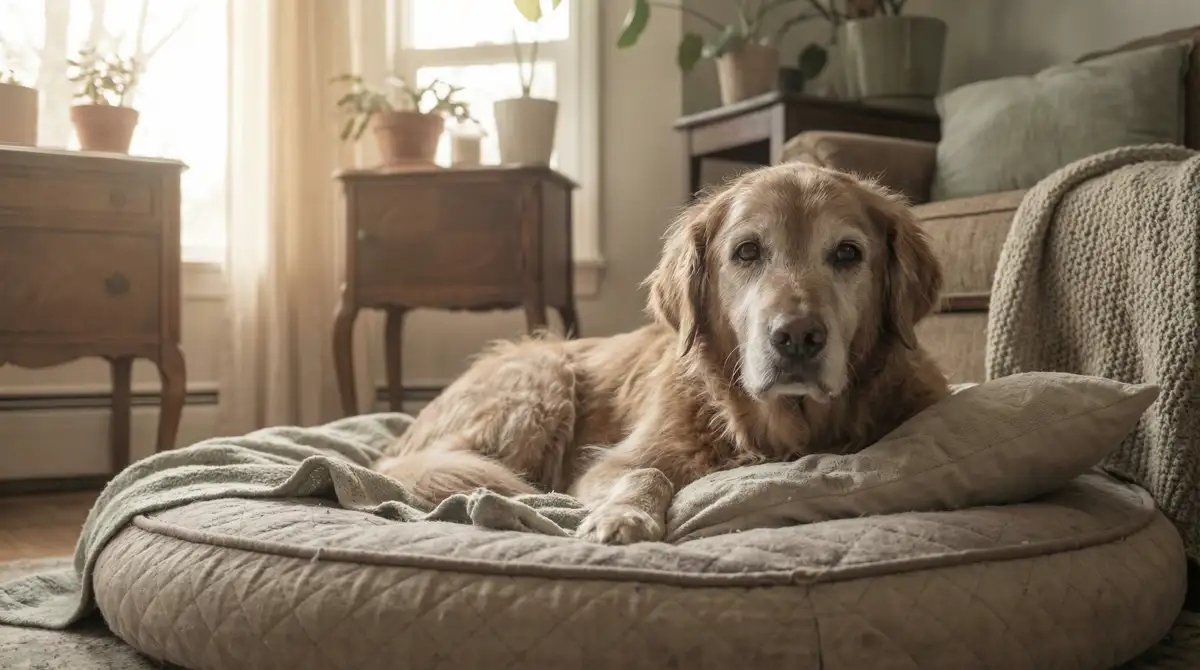 Why do old dogs smell? Usually there is a specific reason: most often plaque and tartar in the mouth, but also skin, ears, anal glands or urine in the coat. In addition, older dogs groom themselves less thoroughly. However, a new, strong or persistent smell can also be a sign of illness and should therefore be checked by a vet.
Why do old dogs smell, and where does the smell come from?
| Where the smell comes from | Common causes and what you notice |
|---|---|
| Mouth | Plaque, tartar and inflamed gums; bacteria produce foul-smelling sulphur compounds. That is why you notice rotten breath and often visible tartar too. |
| Skin and coat | Bacteria or yeast on the skin, damp or matted hair, skin folds. The dog then smells musty, and it also often scratches or has reddened patches. |
| Ears | Inflamed ears smell clearly. Head shaking, scratching at the ear and discharge are also typical. |
| Hind end | Full or inflamed anal glands, faeces in the coat. Typical signs are scooting on the bottom and frequent licking. |
| Urine | Urine that can no longer be held well, or a bladder infection. As a result, you notice wet sleeping spots and a smell at the hind end. |
| Breath and whole body | Less often, general illnesses are behind it, for example of the kidneys. In that case, however, other changes usually appear too, for example in drinking or weight. |
Why do older dogs often smell stronger?
Over the years, several things come together. First, plaque builds up in the mouth over a long time and turns into tartar. In addition, many seniors are less mobile and therefore can no longer reach some areas well, especially the hind end. Also, older dogs lie down more, so the bed and coat get musty faster.
Incidentally, some owners also find a completely normal dog smell bothersome. If your dog is well groomed and nothing else stands out, it may simply be its natural smell.
When should I take my old dog to the vet?
Have the smell checked by a vet if it is new, becomes very strong or persists despite good care. This is especially true if you also notice something else, such as wounds, red skin, ear problems or changes in eating, drinking or weight. For the teeth, veterinary dentists also recommend regular check-ups so that tartar can be removed early.
What can you do about the smell yourself?
- Care for the teeth: Daily dental care keeps plaque low, because it then has no chance to harden. Ask your vet about suitable dental care; there are also specially tested chews and care products.
- Brush the coat: Regular brushing removes dirt and loose hair. It also shows you early whether the skin is red.
- Bathe correctly: If a bath is needed, use a dog shampoo. Shampoo for humans, on the other hand, is not made for dog skin. Dry your dog well afterwards, especially skin folds.
- Keep the hind end clean: So help your senior where it can no longer reach itself, for example with a damp cloth.
- Check the ears: Look into the ears regularly and smell them. Then mention changes at the practice early.
- Wash the bed: Wash blankets and cushions regularly, because a lot of smell collects there.
When is a dog old?
When a dog counts as a senior depends heavily on size and breed. Large and heavy breeds age much earlier than small ones. That is why it is worth not waiting for a particular number but watching for the signs: your dog becomes calmer, sleeps more, gets up more slowly, hears or sees less well.
What else do old dogs need?
- Exercise in moderation: Calm, regular walks are better than wild games. Sniffing and small search games also keep the mind busy.
- Care in the heat: So avoid midday on hot days and always provide fresh water.
- Consideration for the senses: If your dog hears less well, approach so that it can see you. Many dogs learn hand signals quickly, even in old age.
- A good bed: Above all, it should be soft, warm and free of draughts.
- Keep an eye on feeding: Many seniors tolerate easily digestible food better. If weight changes, a closer look is worthwhile; read more in our article on old dogs that lose weight despite eating.
- Regular check-ups: Finally, a health check at the vet helps to detect changes early.
Frequently asked questions
Is it normal for old dogs to smell?
Why does my old dog have such strong breath?
Usually it is due to plaque, tartar or inflamed gums. So have the teeth checked by your vet.
Does it help to bathe my old dog more often?
Bathing with dog shampoo is part of care. But if the smell quickly returns, the cause usually lies elsewhere, for example in the mouth, the ears or at the hind end.
Can I use shampoo for humans?
Better not, because dog skin is different from human skin. Use a mild dog shampoo instead.
Sources
- Hunter T., Bellows J. (VCA Animal Hospitals): Halitosis in Dogs, 2023.
- Barchas E. (veterinarian): Bad Smelling Cat or Dog.
An old dog has earned every bit of care. With a few regular routines in everyday life, it smells pleasant again, and you notice early when something is wrong.
Read more: Old dog loses weight despite eating · Bad breath in dogs · Vitamin B for dogs · Gingivitis in dogs

From our range: DOG FIT by PreThis® CARE senior. Complementary feed for senior dogs with MSM, collagen, glucosamine, calcium, hyaluronic acid, green-lipped mussel, iron, zinc and vitamins A, D and E. You can find it in our shop.

Our daily inspiration is the special moments with our dogs. Here we share this enthusiasm and invite you to become part of the DOG FIT community on our social media channels.
The content of the articles is for general information purposes only and does not replace diagnosis or treatment by a veterinarian. This information does not constitute medical advice and should not be construed as such.
Comment area
We look forward to your comment


Weitere Beiträge


