
Why Dogs Are Gulpers: The Story Behind This Behaviour
 Dogs have been our loyal companions for thousands of years and have undergone a long history of evolution. Yet while many aspects of their behaviour have changed over the course of time, one thing remains constant: their reputation as gulpers. In this article we take a closer look at the background to this behaviour and the reasons why dogs tend to gulp down their food. We also explain why dry food as a miracle remedy for cleaning teeth is pure nonsense. I would like to help you understand the biological facts behind your dog’s feeding behaviour better.
The prehistory and why dogs are gulpers
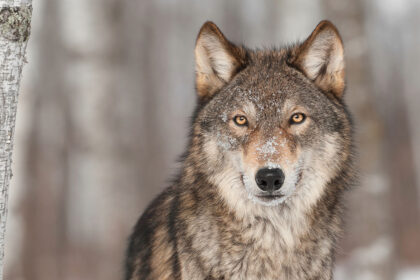
Gulping in dogs has its roots in the wild, when they were still wolves. Wolves and dogs possess a predator’s dentition designed to tear prey and separate out pieces of meat. In the wild, animals also often have to defend their food or hide it from competitors. Rapid gulping helps to secure the food before other predators can steal it. This instinctive behaviour is deeply anchored in the genetic information of our pets and still shows itself today, even though they live in a safe home.
Dry food for cleaning teeth is a myth
The pet-food industry and some veterinary practices often claim that dry food cleans dogs’ teeth. This is supposed to reduce the need to remove tartar from the dog. But this claim should be questioned extremely critically. While the chewing of firm food such as raw meaty bones can offer some benefits for dental health, dry food is no solution for this. It is an invention from the post-war era that serves above all the convenience of humans.
Dry food has no scientifically proven cleaning effect on the teeth. One reason for this is that the contact with the teeth is far too brief, since most dogs simply swallow the chunks down. In addition, this form of feeding has little to do with a species-appropriate diet. The declaration of most products, their manufacturing processes and the addition of artificial additives are clear reasons against dry food. Many owners trust the advertising because they are not familiar with the complex manufacturing processes. Here we advise you to opt for near-natural, genuine food.
Background on animal health and on the industry
It is important for every owner to understand what a truly healthy diet looks like. In veterinary medicine the focus unfortunately often lies on profit through large corporations and the pet-food industry. This often leads to recommendations for unnecessary products or countless medications, while the actual caring attention and near-natural health recede into the background. A deep understanding of the ingredients in the food bowl is therefore indispensable in order to ensure the best care for one’s own animal.
- Instinctive gulping behaviour as a legacy of the ancestors from the wild
- The predator’s dentition is anatomically not made for small chunks of food
- Dry food offers no mechanical cleaning effect for the tooth enamel
- A species-appropriate diet consistently orients itself towards natural sources
Conclusion for species-appropriate feeding
Gulping is an instinctive behaviour that dogs have practised since their time as wolves. The question of why a dog gulps its food has thus been clearly explained. Owners should nevertheless pay attention to how their dogs eat and, if necessary, take measures to minimise the gulping should it lead to problems. This, however, is frequently due to the type of feeding. Dogs fed in a species-appropriate way eat exactly as nature has dictated to them for thousands of years. They behave like a true predator – and those simply gulp.
This article serves as general information and as caring education about near-natural dog nutrition.

Our daily inspiration is the special moments with our dogs. Here we share this enthusiasm and invite you to become part of the DOG FIT community on our social media channels.
The content of the articles is for general information purposes only and does not replace diagnosis or treatment by a veterinarian. This information does not constitute medical advice and should not be construed as such.


