
Many dogs do. Over time they become calmer when greeting and can hold their bladder better. How long that takes varies from dog to dog.
My dog pees out of joy: what can I do?
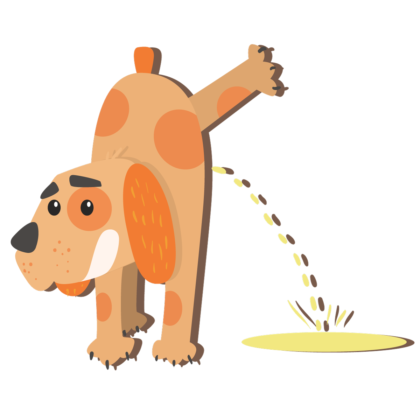 If your dog pees out of joy, he briefly loses control of his bladder in an exciting moment. It usually happens during greetings or play, even though he is otherwise house-trained. Often it is not only joy behind it, but insecurity as well. Puppies and young female dogs are affected most often, and many dogs grow out of it. You can do a lot to help: with calm greetings, patience and no punishment.
Joy, insecurity or both?
- Excitement: Your dog pees when he is very happy, for example when greeting or playing. He seems cheerful and wound up, not fearful.
- Appeasement: Your dog pees when he feels unsure, for example because someone leans over him or speaks loudly. Typical signs are ears laid back, a lowered body and looking away; sometimes he rolls onto his back.
- Both at once: Many dogs badly want to get to you or the visitor and feel unsure at the same time. It is exactly this mix that often leads to a puddle.
Dog pees out of joy: is it incontinence?
Usually not. A dog with incontinence also loses urine in calm moments, for example while sleeping or lying down. Peeing out of joy only happens in exciting situations. But if your dog also has accidents at other times, dribbles more often, or an adult dog suddenly starts doing it, have him examined by the vet. There, a urinary tract infection or a bladder stone, for example, can be ruled out.
How to help your dog
- Greet calmly: Come home without greeting your dog straight away. Wait until he has calmed down, then greet him briefly and calmly.
- Get low: Crouch down instead of leaning over him. Speak softly, don’t look him straight in the eye and stroke his chest rather than his head.
- Let him come: Let your dog come to you instead of walking up to him.
- Greet outside: Move exciting greetings outdoors, for example into the garden or in front of the door. Take him out for a walk before expected visitors arrive.
- Offer something else: Practise sitting or going to his blanket when greeting, and reward him for it.
- Brief your visitors: Ask your guests to ignore your dog at first and then greet him just as calmly.
- Build confidence: If your dog tends to be insecure, calm, pleasant encounters with people in which he is rewarded for relaxed behaviour will help him.
What you should avoid
Don’t scold or punish your dog for the puddle. He can’t help it in that moment, and punishment makes him more insecure. That can even make the problem worse. Wipe up the puddle without comment. Also avoid boisterous greetings with a high voice, lots of movement and picking him up.
When you should get help
If things don’t improve over a longer period despite calm greetings, or if your dog is very fearful in many situations, get support. An experienced dog trainer who uses reward-based training can help you, for example our partners at the MARTIN RÜTTER dog schools in Heidelberg and Erfurt. For severe fear, a vet with a focus on behaviour is also a good place to turn.
Frequently asked questions
My dog pees out of joy. Will he grow out of it?
Should I ignore my dog when I come home?
At first, yes, until he has calmed down. Then greet him briefly and calmly. That way he learns that your arrival is nothing exciting.
My adult dog has suddenly started doing it. What should I do?
Have him examined by the vet first. If it starts in adulthood or also happens in calm moments, a physical cause should be ruled out.
Do dog nappies help?
For a transitional period, dog nappies or belly bands can catch puddles, for example when visitors come. They don’t change the behaviour itself, so practising remains important.
Sources
- Horwitz D., Landsberg G.: Dog Behavior Problems: Submissive, Excitement, and Conflict Urination, VCA Animal Hospitals, accessed 2026.
- Gibeault S.: Why Does My Puppy Pee When They Greet Me?, American Kennel Club, accessed 2026.
Peeing out of joy is not disobedience, but a sign of great excitement. With calm greetings and plenty of patience, the puddles become less frequent over time for most dogs.
Read more: Why does your dog bark at people?

Our daily inspiration is the special moments with our dogs. Here we share this enthusiasm and invite you to become part of the DOG FIT community on our social media channels.
The content of the articles is for general information purposes only and does not replace diagnosis or treatment by a veterinarian. This information does not constitute medical advice and should not be construed as such.
Comment area
Recent comments
We look forward to your comment


Weitere Beiträge


