
In small amounts it mainly irritates the paws and stomach. It becomes dangerous if your dog eats larger amounts. Then you should call the vet straight away.
Healthy paws in winter: road salt, ice and care
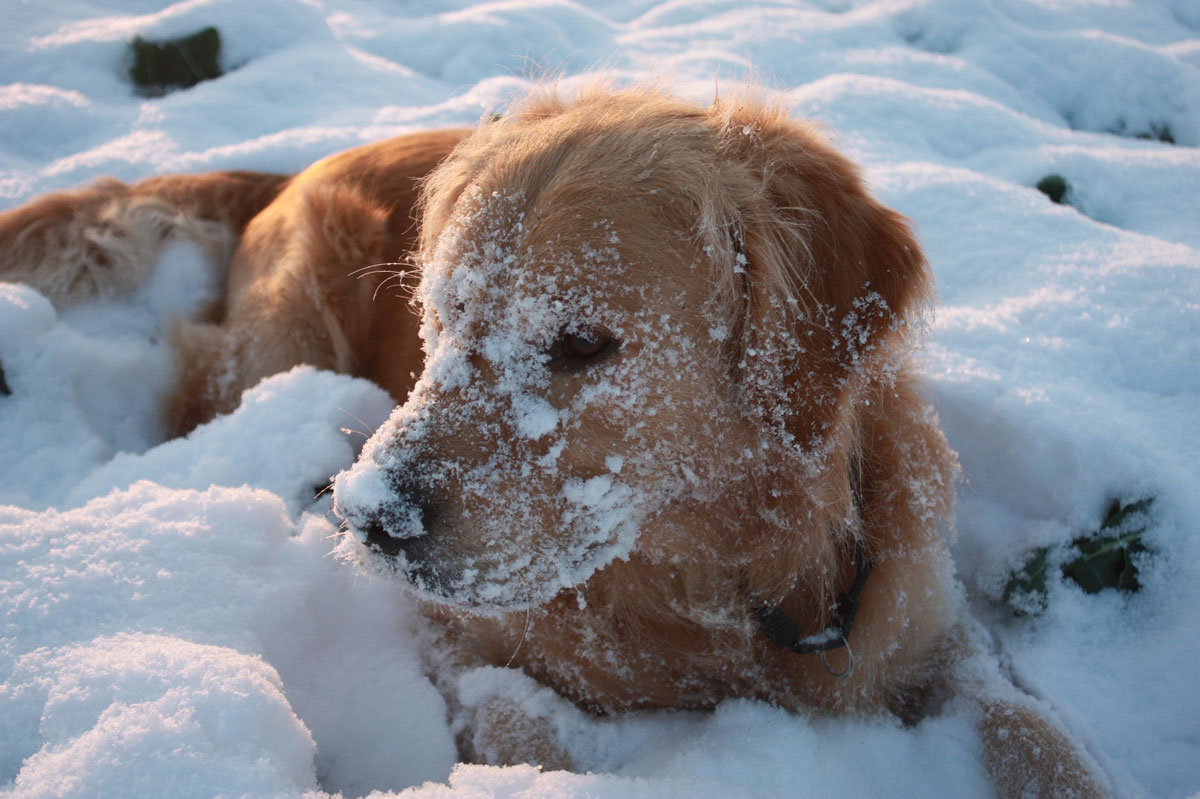 In winter, dogs walk over ice, snow, road salt and grit. This can irritate and dry out the pads, and ice balls easily form between the toes. If your dog licks his paws afterwards, he also takes in road salt. With a few simple steps after every walk and a little preparation beforehand, your dog’s paws stay in good shape even in the cold season.
What is hard on paws in winter
- Road salt: It can irritate the pads and the skin between the toes, especially if your dog walks over it often. Some de-icers can even cause chemical burns.
- Grit: The small, sharp stones can press between the pads and cause small injuries.
- Ice balls: Snow sticks in the fur between the pads and freezes into small balls of ice. That is uncomfortable when walking.
- Dry air and cold: The pads can become dry and cracked.
- Licking: Whatever sticks to the paws ends up in the mouth when he cleans himself.
What to do after the walk
After walking on gritted paths, rinse your dog’s paws with lukewarm water or wipe them clean with a damp cloth. Gently spread the toes so that you also catch salt and stones between the pads. Then dry the paws well. This is also the right moment to look for small cuts, scrapes or dry, cracked areas.
If ice balls are stuck in the fur, don’t pull them out. Instead, place a warm, damp cloth on the paw until the ice melts.
How to protect the paws
- Trim the fur: In dogs with long fur between the pads, fewer ice balls form if the fur there is short. Have a groomer show you how or trim it if your dog fidgets.
- Paw balm or paw wax: Applied before the walk, it forms a protective layer on the pads. Afterwards, a balm helps keep dry pads supple.
- Dog boots: They keep salt and grit away. Get your dog used to them slowly and make sure he doesn’t chew them off and swallow them.
- Choose your route: Where possible, walk on grass or snow rather than freshly gritted pavements.
- At home: If you grit yourself, check the ingredients. Even products considered pet-friendly are not completely risk-free.
Has your dog eaten road salt?
If your dog licks his paws after a walk, he usually only takes in a little salt. That can upset his stomach. But if he eats larger amounts, for example straight from the grit or from an open bag, the sodium level in his blood can rise dangerously. Vomiting and diarrhoea are often the first signs; in severe cases, trembling, seizures or weakness follow. Call your vet straight away.
De-icers containing ethylene glycol, the substance in antifreeze, are particularly dangerous. It is life-threatening for dogs. So always store de-icers and antifreeze safely.
When should you see the vet?
If your dog keeps licking his paws, limps, puts his paw down carefully or the pads are red, sore or cracked and bleeding, have them looked at by the practice. The same applies if you suspect a foreign body between the pads that you can’t remove yourself.
Frequently asked questions
Is road salt toxic to dogs?
Do dogs need boots in winter?
Not every dog. But they can be useful if your dog has sensitive paws or you often walk on gritted paths. Get him used to them slowly.
How do I get ice balls out of the fur?
Place a warm, damp cloth on the paw until the ice melts. Pulling them out hurts. Short fur between the pads helps prevent new ones.
What helps with cracked pads?
A paw balm keeps the pads supple. If the cracks are deep or bleeding, or your dog limps, have the paw looked at by the practice.
Sources
- Higgs V. (PetMD): 6 Things to Know About Pet-Safe Ice Melts, 2023.
- Burke A. (American Kennel Club): How to Clean and Care for Your Dog’s Paws, 2026.
- Chambers C. (Pet Poison Helpline): Is there really a “safe” ice melt?
A few minutes of paw care after every winter walk is usually enough. Then the snow is fun again for both of you.
Read more: What’s good for your dog in winter · Hot asphalt: danger for dog paws

From our range: DOG FIT by PreThis® VITAL shine plus: complementary feed with fish oil and linseed oil (30 % EPA, 20 % DHA), field horsetail extract, lutein and zeaxanthin from marigold, astaxanthin from the blood rain alga and natural vitamin E.

Our daily inspiration is the special moments with our dogs. Here we share this enthusiasm and invite you to become part of the DOG FIT community on our social media channels.
The content of the articles is for general information purposes only and does not replace diagnosis or treatment by a veterinarian. This information does not constitute medical advice and should not be construed as such.
Comment area
We look forward to your comment


Weitere Beiträge


