
A Dog on the Lead – Good or Bad?
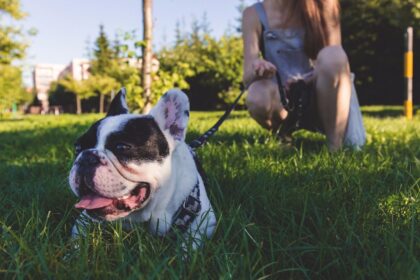 There are always discussions among owners about whether a lead is necessary or not. But what is the dog lead actually for? For example, we take our children by the hand when danger threatens or when they are restless. In the same way, you can see the lead as an extended hand for your dog, in order to caringly create a connection between human and animal. However, you should never use it to reprimand the dog or to pull on it in an uncontrolled way. On the other hand, it is of course also not there for you to hold on to and let your dog drag you around. I would like to help you understand the lead as a positive connecting element.
What is the lead actually for in everyday life
A well-trained dog can be put on the lead without any problem and goes along with its protector, because it knows it will be let off again. Here you can make interesting observations during encounters between dogs. If you want to offer your dog proper protection, you move it to the other side and take a caring curve around unpleasant encounters. In the past there was even the so-called lead jerk. The dog was allowed to go ahead and was then jerked back sharply. Fortunately, this practice has been completely abandoned. When you watch dogs in a group, a recognised, strong dog is accepted by the others as a protector. As if on an invisible lead, the others gather around it. The conclusion is that the lead represents a means of protection for strong guides, whether mental or made of fabric and leather.
Compulsory leads and does it really always have to be
In many places there is a compulsory lead requirement, sometimes even throughout the whole town. Unfortunately, the areas without off-lead running are becoming ever more numerous. In our view this is not a species-appropriate solution, and compulsory leads almost everywhere are not a pleasant trend. Dogs without off-lead running are often no longer sufficiently occupied and become unbalanced. In this way, a lot of energy and also frustration builds up. When it all becomes too much for the animal, it can, depending on temperament and training, even become dangerous. If the dog breaks free or finally finds a place to race around, it may chase after everything. Whether that is another animal, a child, a cyclist or a jogger is often all the same to the dog in this moment of freedom. Passers-by and other dogs can then expect boisterous encounters. When the owner has finally caught the dog again and reprimands it, the animal realises that its freedom is being taken away again. This can lead to aggressive protest. This represents a vicious circle, because compulsory leads are actually meant to protect, but may under certain circumstances create an increased risk.
In densely populated cities, too many dogs often have to share too little space. This is annoying for animal and human alike and, when there is too little room, can also encourage aggression. Then there are often conflicts between those involved, which we should caringly avoid.
How it was when there was no compulsory lead yet
In the past, dogs were often allowed to be more of a dog and to romp and tussle to their heart's content. Back then the whole family watched proudly as their four-legged friend dashed off. In rural areas it was still normal years ago for dogs to take a round through the village and come home again happily on their own. This should be possible and normal again today. It would visibly do both the dog and the human good, and the risks would become smaller.
Does the dog even like the lead
 Many dog owners think that the dog might hold it against them if they want to put it on the lead. For example, when it is just playing with other dogs. They think the dog perceives it as negative when it can no longer romp about. Experts, however, see this as an example of how much we unconsciously humanise dogs. In fact, it is we ourselves who associate the lead with a loss of freedom. In a good relationship between human and dog, the animal would not mind at all walking on the lead beside its person. On the contrary, it often even enjoys it, since it is in its nature to caringly follow us.
Which dog lead is best suited
We consider a retractable lead to be in no way suitable. After all, our arm does not automatically get longer when the child wants to go further away. It is also actually unfair when the dog is pulled back without warning. This is also not good for the four-legged friend's sensitive neck vertebrae. Mainly it comes down to the completely normal guide leads. It is precisely here that opinions differ. Some want total freedom, with the result that their pushy dogs run up to every other dog. Others want total compulsory leads. Both are often not an ideal. You frequently see dogs that pull on the lead because they find the situation unpleasant. When trust is lacking, the animal pulls away, because it by no means feels protected.
The long line and good for training
The long line has the great advantage that it is possible for the human to influence the dog even when it is further away. It can also prevent the dog from rewarding itself through unwanted behaviour. For example, if the dog likes to go hunting, it will reward itself with a cocktail of hormones. When it runs after a hare, the chase alone already releases feelings of happiness. That is why it will again not listen in the next situation. With the long line you can influence the animal in such moments and caringly stop the chase.
No effect without targeted training
However, a disadvantage often lies in the handling of the lead itself. Most owners simply go for a walk with the lead and do not even try to train the dog to stay close. When the long line is off again, they are surprised that the dog runs off once more. Yet the lead is meant to stop the dog from running away while you train it to turn around and come back. Only when the dog stays within the radius of the lead without fully using it up have you properly trained the animal to stay with its human. In our holistic view, teamwork is the key.
Lead Yes or No
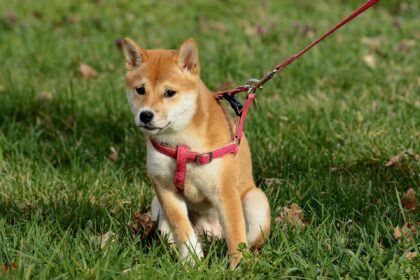 This should really be no issue at all, since most dogs live in an environment where they have to walk on the lead at least some of the time anyway. That is why many trainers argue in favour of caringly familiarising every four-legged friend with it from the very beginning. Then it becomes something completely normal for the dog. Being without a lead by no means automatically means freedom.
This article serves as general information and as a caring way to promote a harmonious relationship between human and dog.

Our daily inspiration is the special moments with our dogs. Here we share this enthusiasm and invite you to become part of the DOG FIT community on our social media channels.
The content of the articles is for general information purposes only and does not replace diagnosis or treatment by a veterinarian. This information does not constitute medical advice and should not be construed as such.


