
Now It’s Tick Season Again!
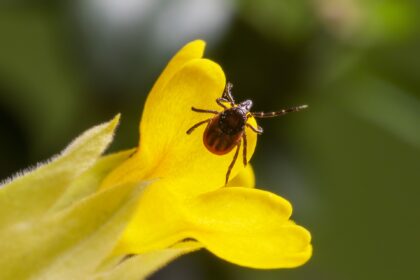 Good day, dear dog friends. Effective tick protection is extremely sensible for our four-legged friends. Before feeding, ticks are only a few millimetres in size, but their bite can have an enormous effect. At the moment the blood-hungry parasites are particularly active. Naturally, the necessary caution applies both to us humans and to our dogs. As is generally known, ticks are by no means merely a nuisance, but as carriers of diseases they are also quite dangerous. I would like to help you protect your dog caringly.
Ticks lurk everywhere out in the open
The parasites are to be found wherever grasses and shrubs grow. There they are brushed off as one passes by and carried along unnoticed. For dogs this problem has become considerably worse in recent years. For a long time the common wood tick was regarded as the best-known species of tick in Germany. Just as in humans, it can also transmit Lyme disease in dogs and trigger painful inflammations of the joints. There is indeed a vaccine against Lyme disease, but it is only suitable if the animal is not already suffering from it. Before a planned vaccination, dogs should therefore be thoroughly examined for antibodies. In the meantime, however, the ornate dog tick and the brown dog tick are also appearing more frequently in Germany. Both species can transmit so-called canine malaria as well as babesiosis and ehrlichiosis. Above all, the first-mentioned illness can, if untreated, lead to death extremely quickly.
Options for prevention and natural alternatives
Which remedy is best suited to your animal is something you should discuss at your leisure with a knowledgeable person. There are special collars and spot-on preparations that are applied at the back of the neck. Special tablets are also available, which, however, are often viewed critically because of their high chemical content. A significant disadvantage of these tablets is, moreover, that they have no deterrent effect at all. The animal has to be bitten first before the attacker dies. In our holistic view, this is often not an ideal solution.
In animal naturopathy we often prefer gentler ways, since many conventional products contain a great deal of chemicals. There is a demonstrably effective and completely natural remedy: high-quality coconut oil. Coconut oil contains lauric acid, which is also found in artificial protective agents. Ticks avoid this oil extremely strongly. In studies at the Free University of Berlin it was demonstrated that dogs rubbed with coconut oil are infested by ticks considerably less often. Its application is exceptionally simple. A hazelnut-sized amount is rubbed between the hands and gently stroked over the coat. A pleasant side effect is the agreeable scent and a well-groomed appearance for your dog.
- Thorough checking after every stay outdoors and in the woods
- Natural defence through the power of lauric acid from coconut oil
- Consistent avoidance of unnecessary chemical burden on the organism
- Early recognition of symptoms after a bite has occurred
Acting correctly in the case of a tick infestation in everyday life
It is in any case advisable to check the four-legged friend thoroughly after every walk. Ticks that are found should be removed immediately. Please do not use any oil to drip on them, as this old household remedy has by no means proved its worth in practice. For safe removal, tick tweezers or a tick hook are particularly well suited. The tick is carefully and evenly twisted out. Should the head remain stuck in the skin, please do not try to remove it by force, as otherwise the puncture wound may become inflamed. In such a case, a veterinary practice should take a look at it.
It is important that the tick is then killed safely afterwards, so that it can by no means seek out a new victim. Avoid direct contact with the parasite’s bodily fluid, as this could, under certain circumstances, attract other ticks. It is best to crush the tick with a hard object and dispose of it safely in the rubbish. We at DOG FIT advise daily care throughout the entire season.
This article serves as general information and as caring awareness-raising for the protection of your dog against parasites.

Our daily inspiration is the special moments with our dogs. Here we share this enthusiasm and invite you to become part of the DOG FIT community on our social media channels.
The content of the articles is for general information purposes only and does not replace diagnosis or treatment by a veterinarian. This information does not constitute medical advice and should not be construed as such.


