
Are snacks and treats healthy for the dog too?
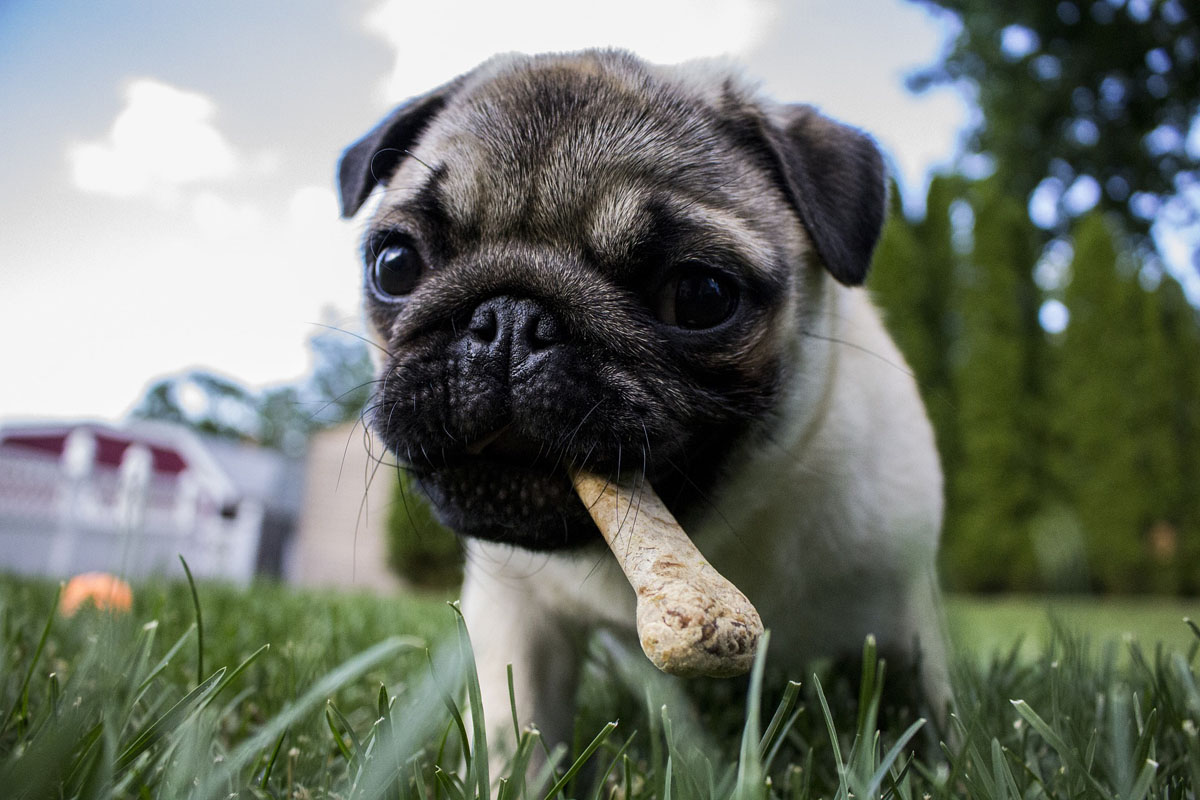 Small rewards are, for the dog, an important form of tasty attention. However, they are apparently even more important for the people who keep the dog. There are situations in which you want to achieve something particular with the animal, and this often works very well through praise in the form of food. It also does the owner good when the animal is delighted with the tasty morsel. Some treats also serve as occupation, such as chew bones for example. But are really all of these offerings healthy for the dog?
Dogs can gain weight
One should think carefully about how many rewards are given per day. For there are more and more overweight dogs, which is also frequently established in veterinary practice. As with humans, the superfluous kilograms not infrequently go back to too much of a good thing. I therefore recommend that you feed quite consciously. This does not mean that no more rewards may be given at all. One should, however, consider how many kilocalories such a morsel actually contains.
A rawhide bone, for example, has around 700 kilocalories. In a medium-sized dog of 20 kilograms, who only uses up a good 1,200 kilocalories a day in total, that already corresponds to more than half of the entire daily requirement. The popular pig's ears, too, have around 400 kilocalories and are thus real calorie bombs. On top of this, the dog often still gets his normal meals and further rewards during training. Just 95 kilocalories of energy more than needed already lead, calculated over the year, to a weight gain of half a kilogram.
The right moment for a reward
What can you do in order to be able to give the reward morsels with a clear conscience? Experts advise, if you use dry food, setting aside part of the daily ration and using this as a reward. Otherwise attention should be paid to a low-calorie food. If your dog eats carrots or pieces of apple, that is ideal, and you should simply try it out for once. It can happen, however, that the animal does not make enough effort for such offerings. In this case you could motivate the four-legged friend with dried meat of a lean variety, such as for example with meat from ostrich, from horse or from rabbit.
- Conscious choice of low-calorie rewards such as fruit or vegetables
- Counting the treats towards the total daily food quantity
- Use of lean dried meat as a healthy alternative
- Taking into account the actual energy expenditure through exercise
Calorie-reduced products as a reward
Some small treats have the additional benefit of dental care. Here too, care must be taken that not too much is given, since even a calorie-reduced product can have, for example, 70 kilocalories. For the care of the teeth and the removal of deposits we recommend, incidentally, purely natural means that work through the power of algae. These are simply mixed into the food and contain as good as no calories.
Special products for dieting are also offered, which, however, do not always give the exact energy content. No more than 1.5 megajoules per 100 grams should be contained, as well as a maximum of 5 per cent crude fat. Unfortunately, by no means all such products fulfil these requirements. Please bear in mind: extras always supply additional calories, even if fewer than conventional variants. In the end the sum of all offerings is decisive.
So are small treats healthy?
It depends entirely on the choice. Please apply the same high quality standards to the small rewards as to the actual dog food. Then they are basically fine. Whether a product is calorie-reduced or not plays a subordinate role in this, since the quality of the ingredients must come first. The total number of calories fed per day is, however, decisive for health.
If your dog gets many rewards on a day with a lot of training, for example, this quantity must absolutely be deducted from the main meal. In doing so, however, the exercise actually performed should be taken into account. If the dog moves a great deal during training, he possibly compensates for the giving of the rewards through the increased consumption of calories. On quieter days, however, this looks quite different. The effort of the precise calculation is worth it in any case for the health of your animal. The dog is dependent here on your caring help, so that he stays fit and healthy.

Our daily inspiration is the special moments with our dogs. Here we share this enthusiasm and invite you to become part of the DOG FIT community on our social media channels.
The content of the articles is for general information purposes only and does not replace diagnosis or treatment by a veterinarian. This information does not constitute medical advice and should not be construed as such.


