
Bullying among dogs
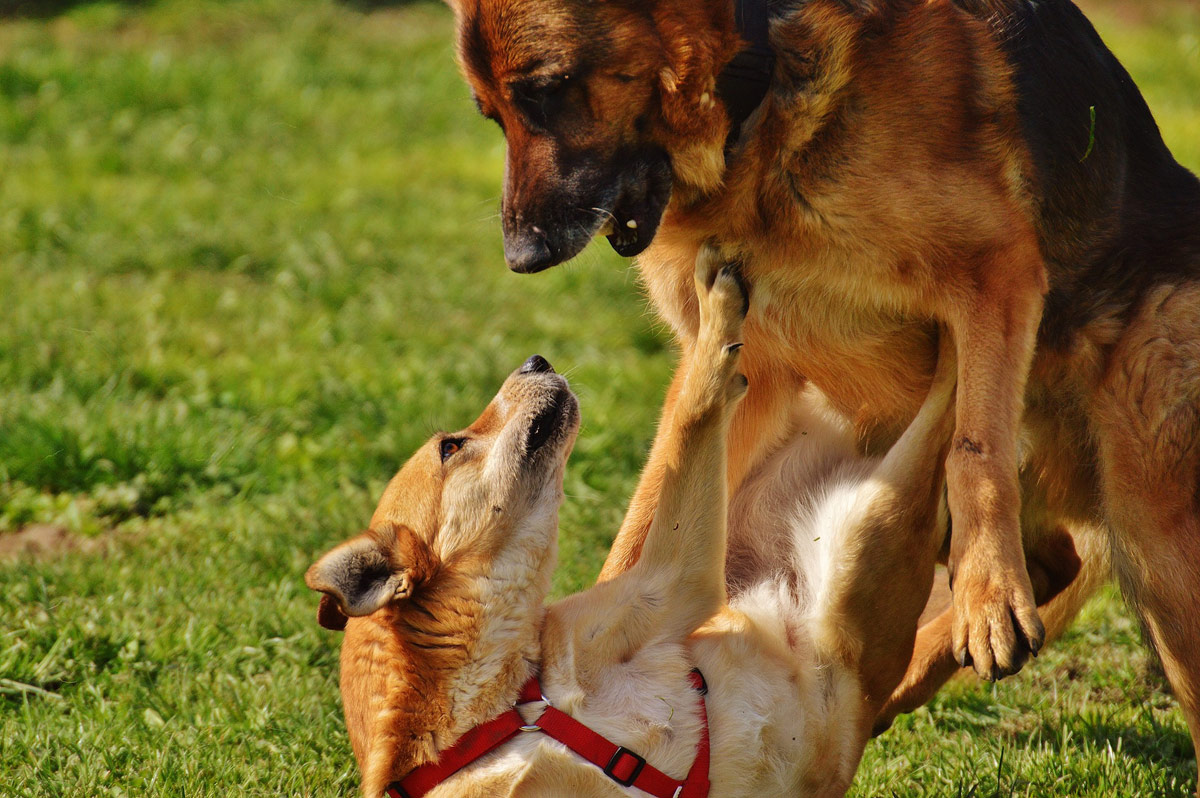
Bullying unfortunately exists not only in the office or the schoolyard – it is no rarity among dogs either. But why does a dog become a victim? It usually affects highly sensitive or insecure dogs that are perceived as „weak“ by their fellow dogs. These dogs often let themselves be harassed passively, immediately throw themselves onto their back (submission) and show no resistance whatsoever. Other dogs recognise this „victim pattern“ in a flash.
Play or serious? How do I recognise bullying?
In contrast to balanced play, in which the roles (hunter/hunted) also change from time to time, bullying is one-sided and often aggressively motivated. It frequently happens as a group:
- The victim is deliberately knocked over, nipped or repeatedly pushed to the ground.
- The bullied dog is „hunted“ (chased) without having any chance to end the game or take a break.
- In groups a dangerous momentum of its own can develop: one dominant dog starts, and others are egged on to join in.
Myth: „they'll sort it out among themselves“
This saying persists stubbornly, but is strictly rejected by modern behavioural experts. No, they don't sort it out – at least not well for your dog.
Our domestic dogs depend on our protection. An insecure dog that is bullied learns only one thing from it: „I am helpless, and my human does not protect me.“
This is how you can tell that your dog is afraid and is seeking help:
- It tucks in its tail, makes itself small or lays its ears back.
- It actively seeks protection with you (hides behind your legs).
- It jumps up at you or barks anxiously.
- In the worst case it panics and blindly takes flight – which can be life-threatening in traffic.
This is how to help your dog properly
When you notice that your dog is being harassed, your intervention is needed. Don't wait!
- Offer protection: Let your dog go behind you or take it between your legs. You form the buffer between it and the „attacker“.
- Block: Ask the other owner to call their dog off immediately. If that doesn't work, you can try to keep the other dog at a distance through confident body language (upright posture, showing the palm of your hand, a deep „hey“ or „go away“). But avoid hectic waving, as that could provoke the other dog even more.
- Leave the situation: Take your dog out of the situation before the fear takes hold.
Rebuilding self-confidence
If a dog has been bullied more frequently, walks can become an ordeal. It goes out of the door already with the expectation of „fear“. It would be wrong, however, now to avoid all dogs – that only reinforces the isolation.
The way back to a healthy self-confidence leads through positive contacts:
- Deliberately seek out playmates that are confident, calm and socially competent.
- Visit a good dog school that offers „controlled play sessions“. Here bullying is stopped immediately, and your dog learns to trust again.

Our daily inspiration is the special moments with our dogs. Here we share this enthusiasm and invite you to become part of the DOG FIT community on our social media channels.
The content of the articles is for general information purposes only and does not replace diagnosis or treatment by a veterinarian. This information does not constitute medical advice and should not be construed as such.


