
My dog pulls on the lead. What can I do?
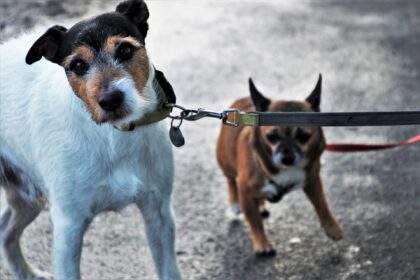 You love your dog, but you are sick of it pulling on the lead and dragging you everywhere. You wonder why it does this and how you can get it out of the habit? Then you are in exactly the right place. In this article you will learn what the most common causes of pulling on the lead are and how you teach your dog to walk relaxed at your side. I would like to help you make the daily walks a harmonious experience again.
Why does my dog pull on the lead
There are various reasons why dogs pull on the lead. In our daily consulting we frequently identify the following points.
- He is excited and wants to reach his goal as quickly as possible
- He has learned that he gets on faster when he pulls hard
- He is insecure and wants to keep control over the particular situation
- He feels hemmed in and threatened by other dogs or people
- He is bored, under-challenged and looking for variety
- He has too little to occupy him and wants to get rid of his energy
- He has not learned clear rules and boundaries from the start
- He simply does not know what you expect of him or how he should behave
How can I get my dog out of the habit of pulling on the lead
To get your dog out of the habit of pulling for good, you need above all a lot of patience, consistency and positive reinforcement. Here are a few tips on how you can proceed caringly.
Choose a suitable lead and a well-fitting harness for your dog. The lead should be neither too long nor too short and should give the dog enough freedom of movement. The harness should fit perfectly and must under no circumstances hurt the dog or restrict it in its anatomy.
Practise lead walking with your dog first in a calm environment with few distractions. Begin with short distances and increase slowly. Reward your dog every time it walks loosely on the lead and gives you its full attention. Ignore it or interrupt it when it pulls and gets agitated. Stand still calmly and consistently change direction until it lets go again.
Use clear signals and commands to show your dog what you want from it. For example, you can use a word like „Heel" to ask it to walk directly beside you. Explain the meaning of the signals to your dog by combining them with a gesture or a clicker and practising them again and again caringly. Reward it for every correct reaction to your signal.
Occupation and activity as the key
Offer your dog enough activity and occupation so that it can use its energy sensibly. Play with it and let it sniff extensively, or choose a dog sport that both of you enjoy. This way you can satisfy its hunting and play instinct and challenge it mentally and physically.
Be consistent and be sure to stick with it. Do not expect your dog to walk perfectly on the lead from one day to the next. It takes time and practice until it has fully internalised the new behaviour. Do not give in when it pulls and tests you. Stay calm and composed and praise it for every bit of progress, however small.
The best tips for lead walking at a glance
- Choose a suitable lead and a carefully chosen harness
- Practise in a calm environment and reward every positive behaviour
- Use clear signals and unambiguous commands for the dog
- Offer enough activity and a sensible occupation
- Be consistent and stay patient in the daily implementation
This article serves as general information and by no means replaces individual advice from a professional dog-training specialist.

Our daily inspiration is the special moments with our dogs. Here we share this enthusiasm and invite you to become part of the DOG FIT community on our social media channels.
The content of the articles is for general information purposes only and does not replace diagnosis or treatment by a veterinarian. This information does not constitute medical advice and should not be construed as such.


