
Human and dog – a dream team
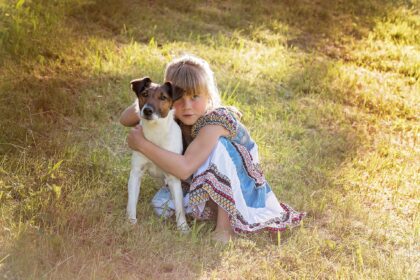 Over the course of evolution, our four-legged friends have become considerably more oriented towards humans. They are very good at interpreting our body signals. That is why it is an important question why not many more people make use of this fact in dog training. Dogs observe their humans very closely to work out what their counterpart expects of them, and to respond appropriately.
Dogs observe their humans very closely
These special abilities deserve more attention. Because dogs react not only to our weaknesses but also to our strengths. All it takes is to guide and encourage the animals in the right way. It usually does not take long before they show what they are truly capable of. In this way they become what all dog owners have in mind, namely a loyal companion. And we do not even need to become verbally or physically rough. We only have to make an effort to understand the natural instincts and the nature of the dog. That is not so difficult at all. It is also important to actively involve the dog in everyday life.
Learning and training follow almost by themselves
If you treat your dog with respect, it learns, quite in passing, how to get along together and also what is expected of it. That is entirely in keeping with its nature, provided it is put into practice naturally and sensitively. Time and again you can observe that there is nothing lovelier for a dog than to be with its humans and with its family. It is rooted in its origins that it wants to be a firm part of the community and, in earlier times, of the pack.
- Interpreting human body signals as the basis of communication
- Encouraging natural instincts without physical harshness
- Active involvement in everyday family life
- Mutual respect as the foundation for successful learning
This article serves as general information and to strengthen the bond between you and your dog.

Our daily inspiration is the special moments with our dogs. Here we share this enthusiasm and invite you to become part of the DOG FIT community on our social media channels.
The content of the articles is for general information purposes only and does not replace diagnosis or treatment by a veterinarian. This information does not constitute medical advice and should not be construed as such.


