
Cruciate ligament rupture in dogs: a comprehensive overview
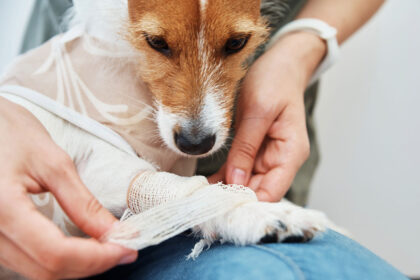 A cruciate ligament rupture is among the most common injuries in our dogs and often requires intensive treatment as well as long-term, caring nursing. This injury affects the knee joint and can significantly impair your four-legged friend's quality of life. From our daily experience, we know how distressing this diagnosis can be for dog and human alike.
What exactly is a cruciate ligament rupture
The cruciate ligament is a central component of the knee joint and provides the necessary stability and correct movement. A rupture in this ligament leads to acute pain, lameness and long-term problems with the joints. We always consider such injuries within the overall context of the musculoskeletal system.
Causes and how the injury develops
Cruciate ligament ruptures can arise from acute injuries or from chronic wear. Acute injuries are often the result of sudden movements or accidents during rough play. In chronic ruptures, factors such as excess weight, a genetic predisposition and degenerative joint conditions play a decisive role. In our holistic view, the nature of the connective tissue also plays a major part.
Symptoms and signs of a rupture
A common sign of a cruciate ligament rupture is sudden lameness in the affected leg. Dogs often show clear pain reactions when the knee joint is touched, and avoid putting weight on the leg. Often the leg is only tapped down with the tip of the paw when standing, which we refer to as toe-tipping.
Diagnosis of the condition
The diagnosis is usually made through a combination of a clinical examination, X-rays and possibly a magnetic resonance imaging scan, in order to determine the exact extent of the injury. An important indicator for the professional is the so-called drawer sign, in which the lower leg can be shifted relative to the thigh.
Treatment options after the findings
The treatment depends heavily on the severity of the injury. Mild cases can be treated with strict rest, anti-inflammatory agents and targeted physiotherapy. In more severe cases, an operation is often necessary to stabilise the knee joint permanently and to avoid long-term damage and arthrosis.
After an operation, careful aftercare is decisive for success. This includes professional physiotherapy, controlled movement and, in the case of excess weight, a special diet in order to promote optimal recovery.
- Ensure consistently controlled movement throughout the entire healing phase
- Avoid excess weight in order to keep the strain on the joints as low as possible
- Use physiotherapy to strengthen the surrounding musculature and for stabilisation
- Provide a balanced diet to support the tissue and cartilage
Prevention and helpful preventive measures
Even though not all cruciate ligament ruptures can be prevented, regular exercise, a healthy diet and the consistent avoidance of overloading can help to noticeably minimise the risk. In doing so, we rely on early support of the musculoskeletal system through valuable vital nutrients from nature.
A conclusion for an active dog's life
A cruciate ligament rupture is undoubtedly a serious and often painful experience for any dog. But with the right treatment and caring nursing, most dogs can achieve a full recovery and lead an active, happy life.
This article serves as general information and does not replace professional advice from a veterinary practice. If you have questions or uncertainties, a professional should always be consulted. If a pet suffers from organic conditions, a veterinary practice should be consulted before giving supplementary feed.

Our daily inspiration is the special moments with our dogs. Here we share this enthusiasm and invite you to become part of the DOG FIT community on our social media channels.
The content of the articles is for general information purposes only and does not replace diagnosis or treatment by a veterinarian. This information does not constitute medical advice and should not be construed as such.


