
Safety: Travelling with Your Dog
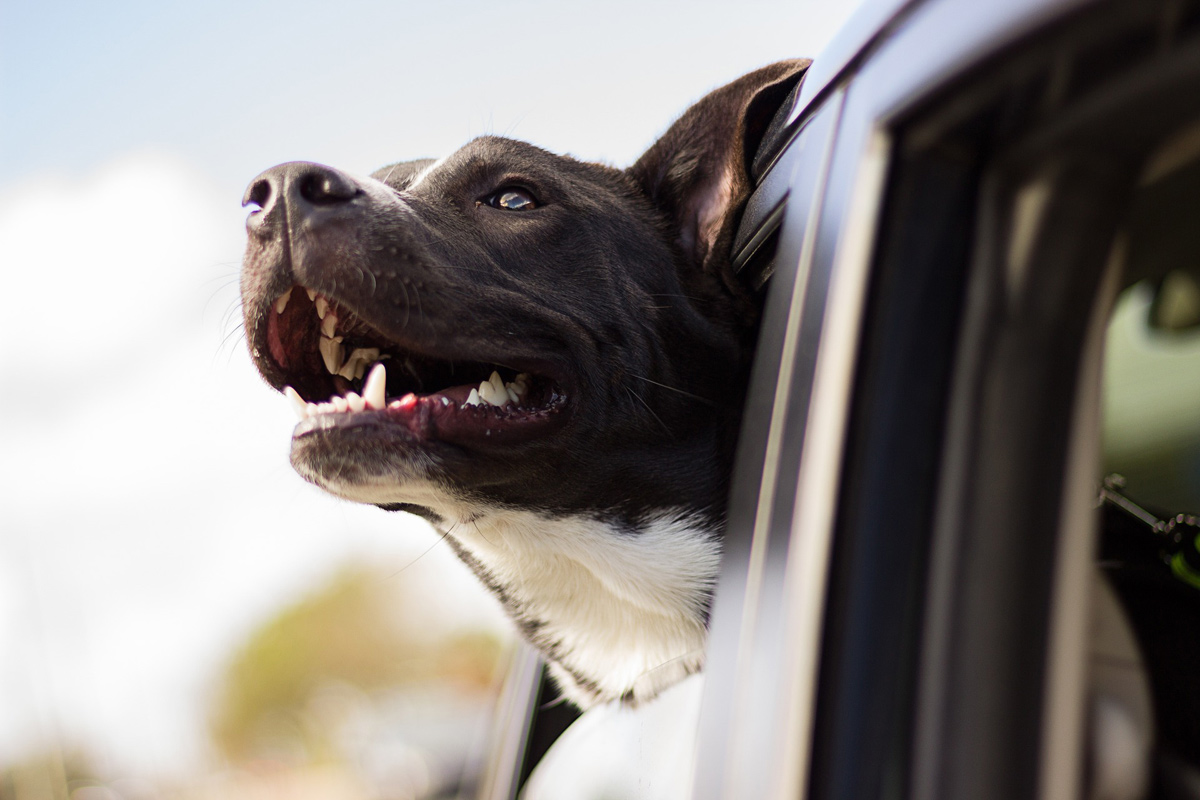 For many travellers, taking the dog along on a trip is completely natural. The dog should come along in the car and reach the destination safely. But there are some important rules in the vehicle for four-legged passengers too. To ensure that your four-legged friend is not thrown through the interior in the event of an accident, it should be well secured at all costs. Here I advise you to make no compromises, in order to protect the health of all occupants.
Road safety is important for the dog too
Although there is no direct obligation to belt up animals, they are legally regarded as cargo. Under Section 23 of the German Road Traffic Regulations, this must be secured in such a way that the road safety of both the vehicle and its occupants is not impaired. If you breach this, you face a warning fine or a penalty. From our daily experience, we know how important a forward-looking form of securing is.
The German Automobile Association carried out tests with dog dummies that show what terrible consequences an accident with an unsecured animal can have. At a speed of 50 kilometres per hour, a dog dummy weighing 22 kilograms flew forward unchecked from the parcel shelf and, with around 25 times its own weight, first struck the headrest and backrest of the driver's seat and then the windscreen.
- Securing the dog in accordance with the current Road Traffic Regulations
- Using sturdy transport crates for optimal distribution of forces
- Placing heavy crates in the footwell or in the vehicle's load area
- Avoiding overheating and draughts throughout the entire journey
In this test the force amounted to as much as 500 kilograms. In a real accident the consequences would be terrible for everyone involved. The animal must therefore be secured even on short journeys without fail. Special dog harnesses, kept as short as possible and sturdy, which can be anchored to the vehicle's belts or via a special fitting to the back seat, do ensure that the animal is not thrown through the vehicle. Nevertheless, the risk of injury for the dog is still quite high.
Transport crates are the safest option
Sturdy transport crates placed in the footwell behind the front seat performed considerably better in the automobile association's crash test. For accommodating larger crates, the load area of estate cars, hatchbacks and off-road vehicles is ideal. Here you should place the crate crosswise to the direction of travel and directly against the backrest of the rear seat. Then the forces occurring on impact are distributed fairly evenly to the side across the animal's whole body. A sturdy dividing grille is also a good choice, since especially in serious accidents the risks for the passengers on the back seat are reduced still further.
Generally, when animals are on board, it is important that you make regular stops, do not drive in intense heat, give the dog enough water and never expose it to draughts. From our holistic point of view, a relaxed atmosphere is essential for the dog's well-being when travelling. And most importantly: never leave the animal alone in the car in intense heat.

Our daily inspiration is the special moments with our dogs. Here we share this enthusiasm and invite you to become part of the DOG FIT community on our social media channels.
The content of the articles is for general information purposes only and does not replace diagnosis or treatment by a veterinarian. This information does not constitute medical advice and should not be construed as such.


