
A Beautiful Coat Is Not a Given – the Slightly Different Article
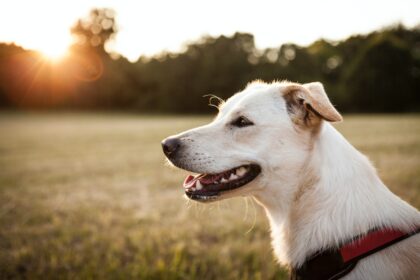 This article is about the skin and coat of dogs, but in a different way than you might expect. A beautiful coat and healthy skin depend not only on external grooming, but above all reflect the overall state of health of your four-legged friend. As with us humans, an unhealthy diet can lead in dogs too to greasy skin, straggly hair and other problems. That is why it is extremely important to ensure the highest quality in the diet and to consistently avoid discount food and pure dry food. Instead, you should feed your dog in a species-appropriate way, as it deserves. When the diet is right, not only can problems with skin and coat be solved, but your dog's entire health begins to shine.
A brief digression on food quality
It is extremely unlikely that a cheap food is of good quality. A tin for 99 cents or a sack of food for just a few euros cannot possibly contain high-quality ingredients. It is important to know by which criteria dog food has been assessed in public tests. Do you feed products from the supermarket or from large online providers? Then your information about nutrition may come primarily from the industry's advertising promises, from paid reports or from dubious websites.
In veterinary medicine, too, nutrition often plays little part during training. Experts in this field would never recommend an inferior food to you, not even as a diet food, hypoallergenic food or special food for certain illnesses. This is about the health of your family member. That is why you should engage intensively with the topic of nutrition in order to be able to act on your own responsibility. Even with expensive food, the price is no guarantee of good ingredients, since high advertising expenditure often drives up the price. It is important to read the declaration carefully. If you believe that fresh meat is contained just because it says so in large letters on the packaging, then there is still much to learn. 90 percent of all ready-made foods are not what they appear to be.
A healthy diet for a beautiful coat
To caringly promote the health of your four-legged friend's skin and coat, it is important that the food contains omega-3 fatty acids. If that is not the case, you can add fish oil or krill oil as well as plant oils such as linseed oil and hemp oil to the food. An overload of the skin can lead to skin irritation and inflammation, which is often accompanied by itching. To avoid this, the performance of the internal detoxification organs is of crucial importance. You can strengthen your dog's kidneys and liver with herbs such as nettle or dandelion by mixing them finely chopped into the food. Older dogs in particular often have difficulties during the coat change, where high-quality oils are very helpful.
- Supply of essential omega-3 fatty acids for shine
- Support for the detoxification organs through natural herbs
- Consistent avoidance of artificial additives and inferior fats
- Targeted help during the coat change, especially for our seniors
Special features of the different coat types
 Coat and skin are a mirror of your dog's health. It is important that you know your four-legged friend's coat precisely and care for it in a type-appropriate way.
Dogs with short hair and no undercoat do not need a trip to the groomer. Their hairs are only 1 centimetre long and are replaced unnoticed with new ones every 6 to 8 weeks. A weekly massage with a rubber-nub brush stimulates circulation and prevents loose hairs around the home. Dogs with a stock coat have smooth top hair and a dense undercoat. The coat is renewed twice a year. In late summer the dog should be brushed thoroughly once a day and in spring even twice a day.
When undercoat and top hair are the same length, these dogs shed all year round. In summer they are particularly prone to heat, which is why you should brush the double coat as often as possible so that it stays airy. Terriers have an undercoat covered by coarse guard hairs. These must be professionally plucked out every 4 to 6 months, since they do not fall out on their own. Poodles and similar breeds have no undercoat and do not shed. Here you have to care for the coat regularly with scissors or clippers in order to caringly prevent matting.
Causes of the typical coat smell
Dogs can sometimes smell strong when they are wet. A dog is home to a microcosm of many thousands of bacteria and yeasts on its coat. When the dog gets wet, metabolic products are released, which causes the classic smell. As soon as the coat has dried, this effect usually disappears again. A strongly perfumed shampoo is not a good solution, since the pH value of dog skin is quite different from ours. A dog shampoo should simply clean and let the dog smell of dog.
The right tools for coat care
 In fact, you only need a few things to ensure a healthy coat. Besides a species-appropriate diet, a suitable brush is decisive. For short hair there are nub brushes, while for curly or long coats a wire brush is recommended. A good comb should not be missing from any household and is particularly effective after brushing to loosen small mats. Only with a comb can you properly remove the undercoat in certain breeds and ensure the necessary air circulation. It is important that the tools sit well in the hand and are made of high-quality material.
I wish you much success and good results in the caring grooming of your dog. Every aspect of this text serves the health of your animal. If you feel caught out on some points, then just consider what your dog would say to you about it.
This article serves as general information and as caring awareness-raising for holistic canine health.

Our daily inspiration is the special moments with our dogs. Here we share this enthusiasm and invite you to become part of the DOG FIT community on our social media channels.
The content of the articles is for general information purposes only and does not replace diagnosis or treatment by a veterinarian. This information does not constitute medical advice and should not be construed as such.


