
What is good for my dog now that he has grown old?
 There is a well-known saying: everyone wants to grow old, but nobody wants to get older. This applies not only to us humans, but also to our dogs. The question often arises of when a dog is actually old, since the puppy days feel like they were only yesterday. There is no clear-cut answer to this. An old rule of thumb, however, says that the bigger a dog is, the sooner he becomes a senior. Giant breeds such as the Irish Wolfhound or the Great Dane have a life expectancy of 8 to 10 years and are already regarded as senior dogs at 6 to 7 years of age. Medium-sized dogs reach this status from the age of 8, whereas small dogs often only do so at 10 years.
Individual fitness and the right preventive care
A great deal depends on the individual condition of the dog. Just as with people, some individuals are already unsteady on their feet at 40, while others are still climbing mountains at 80. Partly this lies in the genes, but predominantly it comes down to lifestyle and nutrition. There are many ways to keep our best friend fit for a long time. If a dog is slow to get going after a rest, this can be a purely age-related sign. If lameness persists, however, it can be a clear indication of arthrosis. The earlier such problems are recognised, the better the chances of treatment. Studies have shown that fatty acids such as Omega 3, 6 and 9, which are contained for example in high-quality oils, caringly support the development of the brain and the nervous system. Early preventive care can mean that fewer age-related illnesses occur.
Adjusting the diet in advanced age
In old age it is extremely advisable to look intensively at the diet. The market offers a great deal of special food for senior dogs, which should nonetheless be treated with caution. Not every ready-made food is actually healthy. A large proportion of the products on the market are pure industrial food. It is therefore advisable to consult qualified nutritional advice in order to caringly clarify individual needs.
In older animals the metabolism slows down, and with it the ability to sufficiently metabolise vital nutrients. It is therefore helpful to switch to a more easily digestible food, so that all important minerals continue to be absorbed. Some dogs lose weight in old age because they eat less. This can be due to dental problems or kidney disease, which are often encouraged by years of feeding with inferior industrial food. In such cases more energy-rich, fresh food often helps. As every dog is an individual, the strategy should always be discussed with experts in canine nutrition. In our expertise we combine knowledge from naturopathy and modern veterinary medicine.
Important nutrients for the senior dog
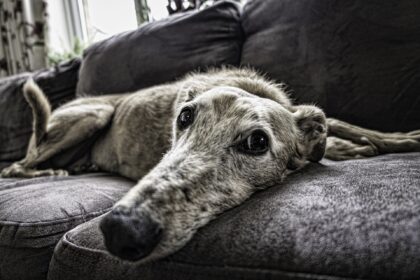 Anyone who wants to spoil their friend who has grown on in years should have the daily rations checked. Many senior dogs cope far better with several small meals than with a single large portion. As the joints are under greater strain in old age, it makes sense to introduce joint-protecting substances early on. These include in particular the following substances.
- Green-lipped mussel extract and collagen for stable joint structures
- Glucosamine and chondroitin to support the cartilage layer
- Natural substances such as frankincense and devil's claw for inflammatory processes
- Vitamins of the groups A, B, D and E for the body's defences
- Trace elements such as zinc, iron and selenium for the immune system
- Antioxidants to protect the cells from free radicals
As the liver and kidneys also gradually decline, a switch to a diet with high bioavailability is advisable. Digestion can likewise become sluggish in old age. Increasing the proportion of crude fibre and adding acacia fibre can caringly help here. Linseed, too, which gently swells in the gut and protects the stomach lining, is extremely valuable. Calcium should be supplied via bone meal or eggshells, since whole bones are often too difficult to digest. Fresh, high-quality feeding remains the best basis for a long, healthy life.
Practical aids for everyday life with a senior dog
Life can become arduous for an old dog. He often can no longer walk well and has difficulty climbing stairs. There are many ways to make everyday life easier for both sides. A food bowl with a wall bracket can be set to a suitable height so that the dog adopts a comfortable posture while eating.
For large, heavy dogs a dog ramp for the car is sensible, since jumping into the vehicle represents very hard work for old bones. A special dog bed without a high rim allows a straight sleeping position that is gentle on the joints. In addition, lifting aids and walking aids for the hind legs can caringly support the dog when climbing stairs. These aids are available from specialist retailers and can considerably increase quality of life.
This article serves as general information and as a caring way of raising awareness of the needs of ageing dogs. Loving treatment and adapted care ensure that your best friend can enjoy his twilight years in complete peace.

Our daily inspiration is the special moments with our dogs. Here we share this enthusiasm and invite you to become part of the DOG FIT community on our social media channels.
The content of the articles is for general information purposes only and does not replace diagnosis or treatment by a veterinarian. This information does not constitute medical advice and should not be construed as such.


