
Like owner, like dog
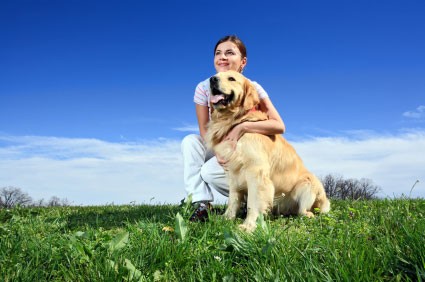
"Dog owners come to resemble their dogs more and more," popular wisdom claims. And indeed, almost everyone knows a corresponding example from their circle of acquaintances. Usually it is a matter of visual similarities, but it also often happens that dog owners choose an animal whose character particularly suits them. But in fact, parallels can be drawn not only between the dog owner and the respective pet, but also quite generally between dog and human. For humans and dogs are alike in many things. Both are social beings that define themselves through their role in the community. That is why the coexistence of these two species is often so harmonious. And there is yet another parallel that many are not even aware of: illnesses. For symptoms and course are often astonishingly similar in human and dog.
What illnesses do dogs suffer from?
Of course there are specific canine illnesses, such as dachshund paralysis or hip dysplasia, that are almost exclusively "reserved" for dogs. Here, of course, a diagnosis and treatment from a veterinary-trained specialist is needed – no question. But in fact dogs can suffer from almost all the illnesses that we humans can have too. The triggers and symptoms of illness, too, are often identical.
Many an attentive dog owner will be able to confirm that their dog often breathes heavily in winter, its nose runs and it wheezes hoarsely. Such symptoms should always be a reason to consult a vet. It is helpful first to draw parallels with human complaints in order to support the dog as best as possible in its situation.
Admittedly: with not all illnesses is it so easy to make a home diagnosis. Nevertheless, it is worth first looking for parallels with humans in the case of conspicuous symptoms, in order to make the vet's diagnosis easier too.
Just humanise a little
For ultimately the human is also just an animal – so why should their illnesses or the ways of relieving symptoms differ so much from those of other animals? Within a certain framework limited by reason, it is therefore completely fine to "humanise" your animal by judging illnesses and complaints by human standards.
An example: if a human has a fever, no one would demand that they still run their normal jogging round, would they? So why should a feverish dog manage its regular walk despite being ill? It probably much prefers to do its business quickly just outside the door and then curl up again in its place.
In this sense: if your dog is ill, then consider what would do you good in its situation. Rest and warmth do good not only to sick humans but also to sick animals. Or in other words: a little humanising often cannot hurt!
Transferring from human to animal makes sense
But parallels between human and animal can be drawn not only with simple clinical pictures, which can often be treated with rest. For more serious clinical pictures such as diabetes, arthrosis or heart failure also occur equally in human and dog.
Although the symptoms of these more complex illnesses too are almost identical to those in humans, you should no more attempt a self-diagnosis in your dog than you would in a human here. The diagnosis must be made by an expert vet, and it is they who decides on the treatment options. However, as a dog owner you can help them by gathering observed symptoms in advance, in order to make a correct diagnosis possible in the first place. In support of the veterinary treatment, you can also find out what care and comfort "humans" provide themselves with in the case of the respective illness.
But this transfer from human to animal makes sense above all because dogs cannot communicate with us humans in language and so cannot tell us what does them good. And if the dog itself cannot speak – from whose world of experience should we draw, if not our own? The human, as already mentioned, is ultimately also just an animal, so one can assume that the mechanisms between illness and health, discomfort and well-being work similarly. So before you consider far-reaching decisions, always seek veterinary advice, for a corresponding treatment can fully restore the animal's quality of life.
A good example here is diabetes: in humans it is completely clear to everyone that a completely normal life is possible with the appropriate medication. Nevertheless, many dog owners think about putting the dog to sleep when they learn that their dog has diabetes. In these (and many other!) cases it is time to rethink! Anyone who as a dog owner takes on responsibility for an animal should not shy away, in the case of illness, from supporting their dog to the best of their knowledge and conscience. Ultimately it will quickly get used to the care measures and enjoy the additional lifetime that you have gained for it in this way.
Ultimately, in the case of illness, it is therefore even quite advisable to humanise your dog. And that expressly does not mean putting little jumpers and the like on it. Rather, humanising should mean that one credits an animal with feelings and sensations too and draws on the human repertoire of comfort and care in order to help the dog. In doing so, however, you should never lose sight of the fact that a dog is still a dog and not a human – but let's be honest: you wouldn't do that anyway, would you?

Our daily inspiration is the special moments with our dogs. Here we share this enthusiasm and invite you to become part of the DOG FIT community on our social media channels.
The content of the articles is for general information purposes only and does not replace diagnosis or treatment by a veterinarian. This information does not constitute medical advice and should not be construed as such.


