
Even small dogs can't be allowed everything
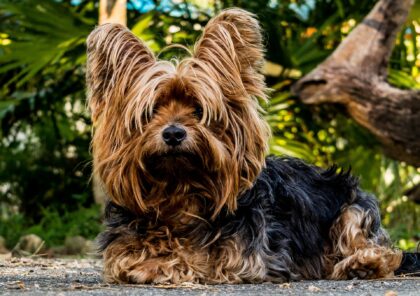 How often you see small dogs in particular, the proverbial lapdog, being thoroughly pampered. They get everything and are allowed to do everything. Yorkshire terriers are the typical example, as you often see them being carried in a handbag. To be honest, I find that distressing. Nature most certainly did not intend it that way.
Small dogs need firm rules too
To come back to the dog in the handbag: he would much rather move about and is looking for something meaningful to do. Small dogs are often given far too many toys and far too many freedoms. Yet this leaves the animals hopelessly overwhelmed. Unclear structures and a lack of rules bring the dog to the point where he cannot orient himself towards his human. Small four-legged friends, too, must learn to take on responsibility, and not only for themselves but also for their human and their own territory. Often owners of small dogs are not even aware that clear rules are needed for them as well. If you want to do your little companion justice, you should be sure to train him consistently. After all, the small dog does not know that he is small.
Pampering and common misunderstandings
On top of the excessive pampering, there are often misunderstandings between dog and owner in their communication. It is usually well meant when a person bends down to the dog to talk to him. What most people do not realise, however, is that this puts the dog in a very difficult position. Leaning forward with direct eye contact counts as a threat for dogs. Small dogs in particular often respond to this with growling and snapping. It is quite wrong then to pick the dog up because you perhaps want to comfort him. From the dog's point of view, however, this means great stress, since he has previously asked his human for distance through body signals and is now even being lifted up.
- Establishing clear structures and boundaries in everyday life
- Avoiding intimidation by leaning forward from the front
- Fostering independence instead of constant carrying
- Targeted training to orient towards the human
Don't shy away from contact with larger dogs
Most small dogs are frequently showered with so much love and attention that they feel pushed into the role of the one in charge. They believe they have to take care of many things, and are simply overwhelmed by it. Many owners of small dogs also often avoid contact with other dogs, especially large ones. They fear that these might do something to their little darling. That is, of course, not entirely unfounded, since the enormous differences in size absolutely must be taken into account. Nevertheless, it is still important that they get to know larger fellow dogs, so that they know these do not necessarily pose a danger.
It makes sense for small dogs to have controlled contact with large and, ideally, adult dogs from a young age. Otherwise they may develop a lifelong fear of them. For the first contact, the large dogs should already have experience in dealing with small breeds. Large dogs are often also yapped at by small animals during a walk, which shows that these cannot properly assess their counterpart.
Training and dog school are important
A good upbringing includes training the most important basic signals such as sit and down, and responding to being called. Small dogs, too, want to be kept busy physically and mentally and not just be a lapdog. Walking, retrieving and practising searching are a firm part of this. If the opportunity does not really arise in everyday life, you should attend a dog school with small dogs, ideally a place where human and dog are trained in equal measure. This will do a great deal of good for the relationship and for their well-being.
This article serves as general information and to foster a harmonious relationship between human and dog, regardless of body size.

Our daily inspiration is the special moments with our dogs. Here we share this enthusiasm and invite you to become part of the DOG FIT community on our social media channels.
The content of the articles is for general information purposes only and does not replace diagnosis or treatment by a veterinarian. This information does not constitute medical advice and should not be construed as such.


