
Ticks: annoying pests
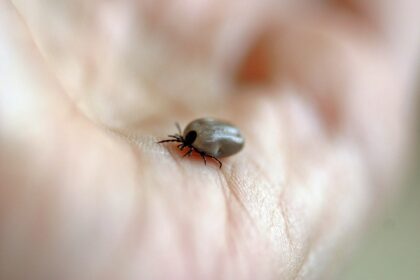 Now the time has come again when the ticks awaken from hibernation and search for blood. Dogs, too, are among their coveted victims. It is therefore important to bear this in mind. Most dog owners have found ticks on their dog at some point. These are usually removed without further examination. But there are also dangerous creatures of this kind. In fact, there are 20 species of tick in Europe. But only three of them are dangerous for dogs. The so-called common wood tick is the most frequent species of tick here.
Transmissible diseases
One of the most common diseases that ticks can transmit to dogs and humans is Lyme disease. Typical of such an illness in dogs is lameness due to joint inflammation. In humans who have contracted Lyme disease, this can be recognised by a reddening of the skin, which also occurs in dogs but cannot be seen through the coat.
Which ticks are active when?
The tick season is often mentioned, but it differs from species to species. For the common wood tick, the period between March and November applies, but above all May and October. Ticks rarely attack in winter. However, they are still active down to seven degrees. This applies in particular to the ornate tick, which is also active on frosty days. As a dog owner, you should therefore be careful even in winter. This also applies to the brown dog tick. It is often brought in from warm holiday regions. It can reproduce all year round in homes and kennels.
What to do if the dog has a tick?
If it has already happened, it is important to remove the tick quickly. Many pathogens only pass to the dog after a few hours to two days of feeding. The sooner the tick is removed, the lower the risk.
How do you remove a tick? Here, too, there are tips: only remove it with a suitable instrument, ideally with tick tweezers. Never use your fingers! Then hold the tick close to the skin. Pull it slowly and evenly away from the puncture site. Do not twist, tear or squeeze it! It is important to remove the tick correctly, as otherwise there is an increased risk of transmission. Often it cannot be said exactly when the tick infested the dog. That is why it is best to check as often as possible.
How can you protect the dog?
There are two important aspects mentioned by the specialists: firstly, as said, you should look out for ticks after every stay outdoors. Even in dense fur they are easy to overlook. Then prevention with antiparasitics. These protect the dog for a certain time, after which the application must be repeated. This prevents the tick from attaching itself or dying shortly after biting. It is very important to apply the product correctly. Also when travelling to risk areas, appropriate protection is indispensable.


