
Mites - a troublesome nuisance for your dog
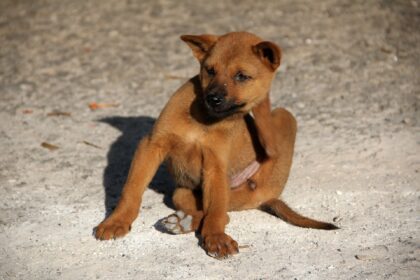 The mite is tiny and has many names, such as harvest mite or peach louse. These parasites have a striking orange-red colour. Far more inconspicuous, but also more of a nuisance, are the traces left by the harvest grass mite. In late summer and autumn these mites multiply very strongly and develop larvae in vast numbers.
They climb knee-high up plants and infest dogs or cats that brush past them. With their mouthparts they scratch the upper layers of skin. On the dog they mostly attack thinner areas of skin such as the spaces between the toes, the area around the eyes, the area around the lips, the bridge of the nose and the ear flaps. As a result, the four-legged friend usually suffers severe itching with reddening of the skin. As it progresses, this can lead to the formation of pustules and welts.
Looking caringly at the Demodex canis mite
Even more common is the mite called Demodex canis, which can trigger what is known as demodicosis. This is one of the 10 most common skin conditions in dogs. The mites lodge deep in the skin within the hair follicles and multiply there extremely quickly. The parasites are usually passed on after birth from the nursing bitch to the puppies. This therefore frequently represents a disease of young dogs. Our expertise in animal naturopathy helps to strengthen the immune system of these young animals caringly.
The symptoms often begin in places with close contact to the mother dog. Typical is hair loss in the area around the eyes, producing a spectacle-shaped loss of hair on the face. The disease can also spread to other parts of the body. There is also a special form on the paws. Usually the front paws are affected, which can become inflamed and swell painfully.
Recognising the danger from the burrowing mite
A third type is the burrowing mite. It penetrates the layers of the dog's skin, multiplies there and diligently lays its eggs. This type of mite is transmitted through direct contact from dog to dog. The age of the animal plays no part whatsoever in this. Annoyingly, these mites can survive in the home in the form of crusts or shed skin flakes for up to 18 days. Under certain circumstances this can even pass to us humans. With closer contact between dog and human, the mites can migrate across and cause what is known as scabies.
- Frequent infestation of body areas with extremely thin skin
- Severe itching and marked redness as the main symptoms
- Risk of infection through direct contact with infested fellow dogs
- The need for a thorough cleaning of the entire environment
Seeking expert advice if you suspect a problem
If you suspect a problem, it is a good decision to consult a specialist in animal naturopathy. There, swift help can be given and itch-relieving measures can be caringly recommended. Depending on the type of mite, natural preparations that also help against ticks are useful. We cannot recommend chemical preparations under any circumstances, because of the massive strain they place on the organism. The dog's environment must of course also be made mite-free. This is in particular an important measure to caringly prevent transmission from the animal to the human.
This article serves as general information and to caringly raise awareness of your dog's skin health.

Our daily inspiration is the special moments with our dogs. Here we share this enthusiasm and invite you to become part of the DOG FIT community on our social media channels.
The content of the articles is for general information purposes only and does not replace diagnosis or treatment by a veterinarian. This information does not constitute medical advice and should not be construed as such.


