
Driving with a dog
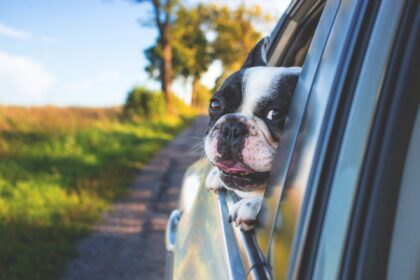 Dogs are like us humans. Some are good passengers, and with others that is not yet the case. But whether on short trips or the big journey to the holidays and to visits: the dog as a passenger should feel comfortable in the car. For that it should be given a safe spot.
This includes being considerate of the dog
Jerky starts, sharp braking and fast cornering throw even a well-secured dog off balance. This can lead to it learning to fear car journeys. Curses and insults aimed at other drivers are also incomprehensible to a dog. It then thinks you are angry with it.
The dog should always have the same fixed spot
In the back on the rear seat, in the footwell on the passenger side or even on the passenger seat. There it should also be able to lie down comfortably. That way the risk of nausea is lowest. This can easily arise from constantly looking out. A fixed spot also has a more calming effect on the animal.
A seat belt for dogs
In a passenger car you can secure your dog with a harness and a special seat belt. The belt allows it some freedom of movement but tightens with abrupt changes of speed. Small dogs are safest in a special transport basket, which should, however, also be secured with the belt. Please put the belt on consistently, even on short journeys.
Boot or seat
Large dogs in particular are best accommodated in the luggage compartment of an estate car, in large off-road vehicles or in a van. Did you know that, legally, they count as cargo and therefore have to be stowed safely? The fabric grilles that some vehicles have will not withstand a dog thrown forward. So the dog should be separated from the passenger compartment by a sturdy grille. Even better are metal boxes, which are available in various designs for all car models. They protect the four-legged friend optimally from injuries in the event of an accident.
Getting in and out only on command
The dog should first sit calmly in front of the car before it is allowed in. Then you give the command to get in. When getting out too, the dog must stay in the car until the clear signal to leave comes. After all, as the owner I get out before it does. This is important in case cyclists, walkers or other dogs come along. When parking at the roadside, you also have to watch out for passing cars.
- A safe, fixed spot for relaxed travel
- Use of special belts or sturdy metal boxes
- Getting in and out solely on a clear command
- Avoiding the dangers of heat in a parked car
Better to stay calm in the car
Many dogs think it's off to romp about outside right away. They are all excited and whine and howl. This naturally distracts the person at the wheel and is not without danger. You have to stay firm here and never let the dog out while it is behaving so excitedly. It would then be off, out of control, in an instant. If you take a break or it really is time to romp, you should only switch off the engine and open the door once the dog is calm. Don't raise your own voice, as that only drags the situation out unnecessarily.
Cars are not a storeroom for dogs
Something that is very important and is said again and again, yet is often disregarded: the car is not a storeroom for the dog. If you quickly pop in to buy some baked goods, that is not a problem. A dog can stay in the car for half an hour during a shopping trip, provided there is a sufficient air supply and, above all, it is not hot. In summer a dog should not be left in the car at all, not even in the shade. Even during the cooler seasons, temperatures in the car heat up quickly in sunshine.
This article serves as general information and for safe travel with your dog.

Our daily inspiration is the special moments with our dogs. Here we share this enthusiasm and invite you to become part of the DOG FIT community on our social media channels.
The content of the articles is for general information purposes only and does not replace diagnosis or treatment by a veterinarian. This information does not constitute medical advice and should not be construed as such.


