
How to Find the Right Puppy
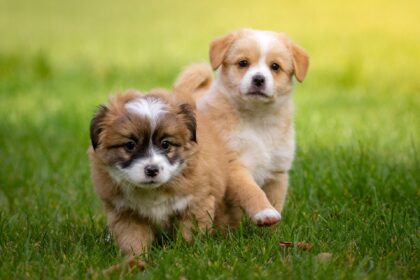 Anyone who gets a dog must be aware that they are acquiring not a fashionable accessory but a fully-fledged family member for many years. Depending on the breed, a dog lives up to 15 years, some even longer. And the four-legged friends want to spend as much of their life as possible with their family. But for everyday life with your new friend to turn out truly harmonious and enriching, you should take enough time in selecting the right animal. We have gathered valuable tips on what you should look out for when choosing your dog.
Finding the Right Breed for Your Own Lifestyle
Of course all puppies are cute. There are breeds that will presumably appeal to you visually more than others. Even if it cannot be denied that looks always play an important role in choosing a pet, you should not base the decision purely on that. Choosing a dog by its breed does make sense. After all, the breed is associated not only with visual features but also with very particular character traits and personality types.
While small companion dogs such as the Chihuahua were bred to caringly entertain people, protection dogs such as the Dobermann are normally equipped with strong territorial behaviour and a pronounced protective instinct. Herding dogs and working dogs such as the Border Collie, by contrast, need a lot of occupation, since they were bred for working independently. Some breeds, such as the Great Dane, are known for their particularly gentle nature, while others, such as the Jack Russell Terrier, stand out rather for a lively manner. That is the plus point of a pedigree dog compared with a crossbreed. It is usually more predictable in its physical and character development.
If you inform yourself about the breed-typical characteristics, the likely nature of the future dog becomes foreseeable. Responsible breeders, such as those to be found at the association for German dog affairs, are of course also happy to advise on whether the chosen breed is compatible with your individual lifestyle. Here we advise you to make an honest self-assessment.
Checking the Puppy's Origin Extremely Carefully
An important point is the question of where you should actually get your puppy from. From friendly neighbours through responsible breeding to organised puppy trade, much is possible here. For the sake of the animals, you should urgently keep your distance from irresponsible propagators and organised trade. The conditions prevailing there represent a cruel situation for the dogs and, moreover, often result in serious illnesses, breeding damage and sometimes extreme behavioural disorders.
Signs of animal-appropriate breeding are the following points:
- The parent animals can be viewed directly on site
- The rearing takes place within the family, so that the puppies already know everyday stimuli such as vacuum cleaners or cars
- The breeder takes plenty of time for thorough, caring advice
- The young stay with their mother at least until their eighth week of life
- The puppies are already wormed and provided with an important first vaccination protection
Even if it initially pleases your wallet, you should become sceptical at overly low prices. Even if you decide against a dog with papers, you can assume that various costs for species-appropriate rearing arise even with a private individual. The person handing the dog over must offset these with the purchase price. Here the vet costs of the mother animal during pregnancy, the whelping box and the initial care of the young are to be mentioned. Added to this are worming treatments, vaccinations, the vaccination passport and high-quality puppy food. Thus several hundred euros per puppy quickly add up. Buying a sick puppy from propagators is considerably more expensive in the long run, since alongside the cruelty to animals, high vet costs often also arise.
Selecting the Individual Puppy from the Litter
Once the general conditions are clarified, it comes to the fine-tuning. In front of you a whole litter of sweet puppies is romping around, and you have to decide on one. A thorough selection can save a lot of trouble later. If, for example, you have small children in the family, you are better off with a rather robust puppy character than with a very sensitive little dog that may under certain circumstances quickly be traumatised. If you have little experience with dogs, you should also keep your distance from very dominant puppies, otherwise the new family addition will quickly claim the leading role for itself.
To find out which puppy is the right one, you have to engage with its personality. Let the breeder or the keepers of the mother animal advise you. They have known their puppies for much longer and can better judge which behaviour is typical. Take your time over the selection. After only one meeting you will not yet be able to form a comprehensive picture, whereas after several visits the impression becomes ever more multifaceted.
In addition, you should, where appropriate with the help of a dog training specialist, carry out a puppy test, which is possible from the sixth week of life. Here it is tested, for example, how much joy in play and drive to explore the puppy possesses, but also how submissively it reacts. There are various approaches to this, ranging from the submissive posture through to socialisation tests.
The Alternative from Animal Welfare
Even though puppies really are cute, one should never forget that it is a long road until the ball of fluff has become a well-behaved dog. It is therefore worth considering, as an alternative, deciding on an already grown dog from animal welfare. In doing so you not only give an animal a second chance but also benefit from clear advantages. Here you usually know what you are getting, since the character is already fully developed. Moreover, a certain basic training is usually already present. We at DOG FIT always prefer rescue dogs, since the welfare of these animals is especially close to our hearts.
Whether you decide on a puppy or a grown dog, it is important that the four-legged friend fits well with you and your family. We hope that we have been able to give you a few good ideas for choosing your new dog.
This article serves as general information and by no means replaces advice from a specialist.

Our daily inspiration is the special moments with our dogs. Here we share this enthusiasm and invite you to become part of the DOG FIT community on our social media channels.
The content of the articles is for general information purposes only and does not replace diagnosis or treatment by a veterinarian. This information does not constitute medical advice and should not be construed as such.


