Skip to main content Skip to search Skip to main navigation

Insidious and irritating – mites
Mites

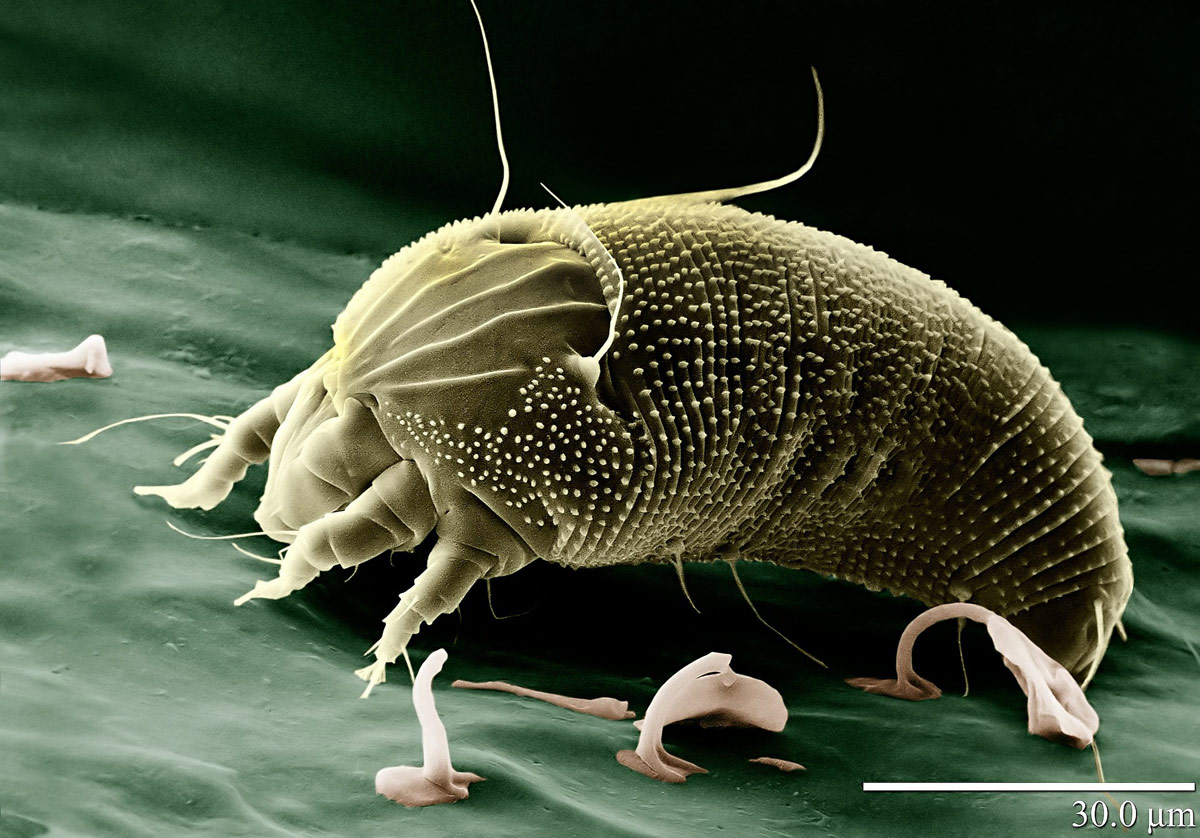
Mites are small, irritating and insidious – and they are among the most common triggers of allergic conditions in our dogs. There are thousands of species, but for dog owners two groups are especially relevant: the house dust mite and the storage mite. Because they are barely visible to the naked eye (up to 0.5 mm in size), they are often only noticed once the dog is already showing severe symptoms.

Where do these pests lurk?

Here a distinction has to be made, as the mites prefer different habitats:

  • Storage mites: They frequently occur in dry grain, maize and, unfortunately, often in dry food that has been stored for too long or incorrectly (open, damp). They feed on plant matter and mould spores.
  • House dust mites: They live in the dog's environment (carpets, dog bed) and feed on skin flakes and organic waste from humans and animals.

Symptoms: itching and ear problems

Dogs usually react to the allergens (the mites' droppings) through their skin. A very typical early warning sign is inflamed ears (otitis externa), as the skin inside the ear is particularly sensitive and the warm, moist climate favours mites and bacteria. If recurring ear infections occur, an allergy should be right at the top of the list of suspects.

The reaction is often severe: the dog scratches itself until it bleeds, licks its paws or scoots along on its bottom. The constant scratching destroys the skin barrier, which opens the door to bacteria and yeasts (Malassezia). So-called secondary infections develop, which itch and smell intensely.

Treatment and therapy

The vet will usually carry out an allergy test (blood test or intradermal test) to find the exact trigger. Once the culprit has been identified, there are various options:

  • Immunotherapy (desensitisation): Here the dog's immune system is slowly accustomed to the trigger. The chances of success are around 70 to 80 per cent, but it requires patience.
  • Medication: In the acute phase, anti-itch remedies (antihistamines, Apoquel or Cytopoint) are often used.
  • Caution with cortisone: Cortisone is often injected quickly. Although this relieves the itching immediately, it also weakens the skin's own defences. Especially when bacteria or fungi are already involved, cortisone can make the problem worse in the long term.

Product Note: DOG FIT by PreThis® CARE senior & VITAMIN B Combo Set 🛒 – A tailored complementary feed for senior dogs, featuring carefully balanced micronutrients to support the musculoskeletal system, the nervous and immune systems, and metabolism. Free from unwanted additives and preservatives. Discover it in the shop now:

Go to the Senior Combo Set in the shop

Comment area
We look forward to your comment
Each comment is carefully reviewed before publication to ensure that it complies with our netiquette and is relevant to the topic.
Privacy
Weitere Beiträge
  • Health & Illnesses

    The most common illnesses in pugs and French bulldogs

    Pugs and French bulldogs are charming and popular dog breeds that win many hearts with their distinctive appearance and friendly nature. Unfortunately, however, they are also overbred and brachycephalic breeds, which makes them more susceptible to certain health problems. Breeding problems are not the subject of this article. In this article, we will examine the […]

    Read more
  • Training & Behaviour

    The dragline for dogs – good for training

    The towing line has the great advantage that it is possible for people to influence the dog, even if it is far away. It can also prevent the dog from rewarding itself with wrong behavior. For example, if the dog likes to hunt, it will reward itself with a hormone cocktail. Especially when he goes […]

    Read more
  • Health & Illnesses

    My Old Dog Has a Cold » Guide

    Dogs, and older four-legged friends in particular, are just like us humans prone to colds and a runny nose. However, a cold in a dog can point to various causes that should be taken seriously, especially in older dogs...

    Read more
  • Health & Illnesses

    Dogs can also get diabetes

    In healthy people, the body produces insulin, which helps process sugar. However, diabetes patients produce little or no insulin. This is due to a certain organ, the pancreas, no longer functioning properly. But all other mammals also have a pancreas and that’s why our pets, dogs, cats or guinea pigs can get diabetes.

    Read more
  • Nutrition

    My dog eats feces » Guide » Causes and tips

    The phenomenon of dogs eating feces, known as coprophagia, is often a cause of concern for dog owners and can have many causes. This guide looks at the possible reasons for this behavior and offers recommendations for treatment. 1. Imbalance of the intestinal flora An imbalance in the intestinal flora can cause dogs to eat […]

    Read more
  • Training & Behaviour

    My dog is afraid of thunderstorms: what can I do?

    Thunderstorms can be an extremely frightening experience for dogs. Loud thunder, bright lightning and atmospheric changes can cause fear and stress in many dogs. If your dog reacts fearfully during thunderstorms, you are not alone. Many dog owners face the challenge of helping their four-legged friends in such situations. In this article, you will learn […]

    Read more
  • Nutrition

    Harmful additives in dog food: What you need to know

    Choosing the right food for dogs is crucial for their health and well-being. Unfortunately, many commercial dog food products contain harmful additives that often do not have to be declared. In this article, you will learn what these additives can be, why they are problematic and why they do not always have to be declared. […]

    Read more
  • Health & Illnesses

    Kidney insufficiency in dogs – causes, symptoms and treatment

    Kidney insufficiency, also known as kidney failure, is a serious condition that occurs frequently in dogs. It can run an acute or chronic course and requires careful monitoring as well as caring treatment. In this guide you will learn everything important about the causes, symptoms and treatment.

    Read more